


US Tariffs Have Repriced the Hide Market. Here's What That Means for Your Tannery.
- alessandro5941
- May 25
- 3 min read
Every tannery owner I've spoken with in the last three months has the same question on the table: what do the US tariffs actually mean for us in Europe? Not for the American brands making noise about it — for us, on the floor in Arzignano or Santa Croce or Solofra.
Here's the short answer: margins are tighter, uncertainty is higher, and your machines need to be running cleaner than ever. Here's the longer one.
---
## Why the Numbers Don't Add Up — and What That Signals
The basic market logic went like this: the US introduced high tariffs on imported leather goods. American brands, which account for roughly 45% of India's leather export volume, started pulling back orders. Less demand should equal cheaper raw hides. Simple.
Except hide prices have only dropped about 10% globally. The expected correction was closer to 40%.
What happened? Suppliers learned to hold. Tanneries and traders converting raw hides into wetblue and putting them in storage rather than selling at lower prices. The supply side has developed enough market discipline to resist gravity. Combined with a US cattle herd at its smallest level since the 1950s — down due to drought and rising feed costs — raw material scarcity isn't going away. According to analysis from the American Farm Bureau, the structural tightening of the US herd creates a multi-year constraint on premium hide availability.
For European tanneries, this means one thing above all: you're operating in a market where input costs have stabilised at a new, higher floor — and that floor isn't moving much downward for the next two to three years.
---
## What the Tariff Disruption Opens Up for European Leather
Not everything here is bad news. The same tariff dynamics pushing American brands to reconsider their sourcing are opening room for European manufacturers in the premium segment.
Luxury and mid-tier fashion brands that have historically relied on Asian tannery supply chains are looking harder at European provenance. A tannery with clean LWG certification, documented traceability, and a track record on quality can position itself as the stable option in an unstable market. The premium leather that differentiates genuine leather from alternatives — full-grain finishes, natural blemishes as authentication, water-based processes — is exactly where European tanneries have an edge no Asian producer can close quickly.
The market for velvet suedes, waxy nubucks, and premium pull-up leathers is strengthening, with a trend cycle likely to run at least four more seasons. These are technically demanding finishes. They require machines running consistently well, not machines that are fine most of the time and occasionally stop production.
The window to capture this demand is now. Brands that got burned on supply chain disruption in the last 18 months are actively looking for stable suppliers to lock in.
---
## What Smart Tanneries Are Doing With This Information
If the hide cost floor is higher and demand in the premium segment is stronger, the operating question is simple: what does one hour of unplanned downtime cost you today versus two years ago?
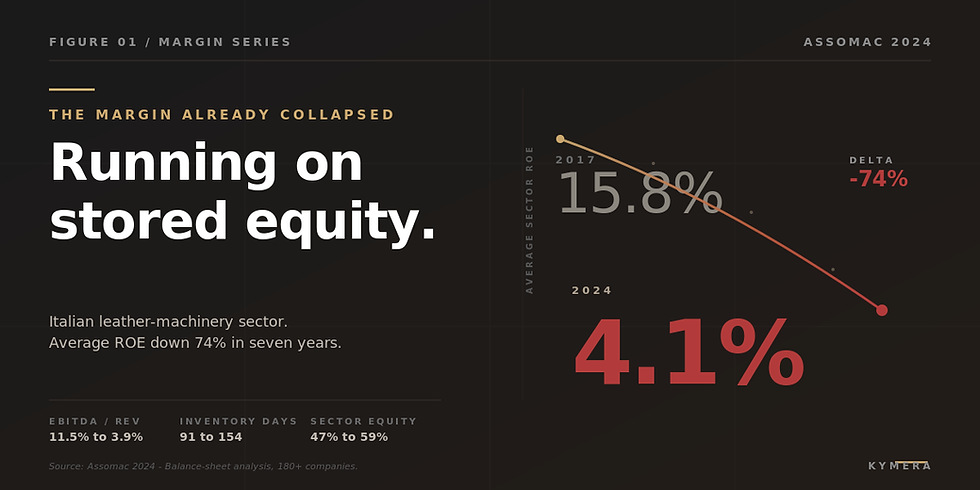
At €1,500–€3,000 per hour of shaving line downtime, the math on deferred maintenance has changed. A tannery that ran its blades longer than optimal and absorbed the occasional stop as a tolerable cost is now facing a different calculation. Margins are thinner. The cost of the batch that comes through with shave defects is higher. The order you can't fill on time is a more expensive miss.
Three things I'd prioritise right now:
- Tighten your blade cycle discipline. If you're running on feel rather than a defined interval, that's where you're losing consistency and cost control you can't afford to lose. Tools like T-CAT Pro exist precisely for this.
- Review your spare parts inventory. The supply chain disruptions of the last two years have made long lead times normal. Having a critical component out of stock when you need it is no longer just inconvenient — it's an order missed.
- Consider structured financing on machinery maintenance. With input costs elevated, CAPEX decisions that used to look like discretionary spending now look different. KEP exists for exactly this kind of scenario.
The tariff disruption isn't going to reverse quickly. The tanneries that use this moment to sharpen operations are the ones that will be standing when the market restabilises.
---
If you want to talk through what this means for your specific floor setup, write us at info@kymeragroup.it.
---
Kymera Srl — info@kymeragroup.it — +39 0445 192 2315


Comments